
Search
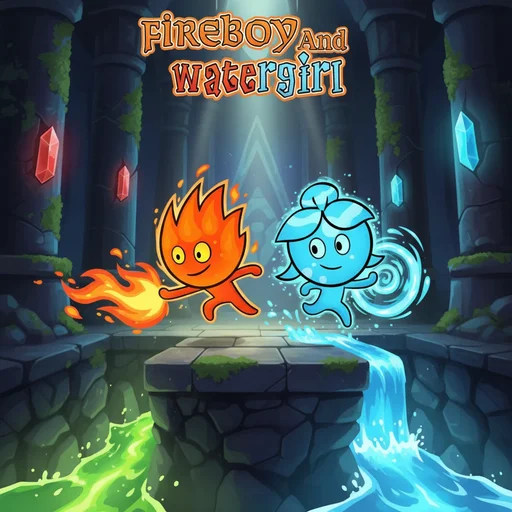
Fireboy and Watergirl stands as one of the most beloved cooperative puzzle-platform games of the modern browser gaming era. This dynamic duo has captivated millions of players worldwide since its initial release, offering engaging gameplay that emphasizes teamwork, strategy, and creative problem-solving. Whether you're discovering this classic for the first time or looking to master advanced techniques, this comprehensive guide covers everything you need to know about playing Fireboy and Watergirl online.
The game's appeal lies in its simple yet addictive mechanics combined with progressively challenging puzzles. Players control two elemental characters with complementary powers and weaknesses, requiring constant cooperation to navigate temple mazes, collect gems, and reach safety. With multiple installments in the series and various platforms available for play, Fireboy and Watergirl continues to thrive as a staple of free online gaming.
Fireboy and Watergirl is a cooperative puzzle-platform video game series created by indie game developer Oslo Albet. The franchise launched on November 19, 2009, as a Flash game and has since expanded into six major installments. Originally developed as Adobe Flash games, the series was later converted to HTML5 technology, ensuring compatibility with modern web browsers and mobile devices after Flash's discontinuation.
The original game emerged from Oslo Albet's fascination with puzzle games and his desire to create mechanics that felt natural for players. He finalized the game mechanics before designing characters, recognizing that two characters with opposing elements would create the most engaging gameplay experience. Fireboy was designed first, with his fiery hair providing visual distinctiveness. Watergirl's "waterfall" ponytail design followed, creating a clear visual contrast while appealing universally to boys, girls, and families.
Developer: Oslo Albet (indie game developer)
Original Release Date: November 19, 2009 (Flash version)
Updated Release Date: May 2018 (HTML5 conversion)
Technology: HTML5
Platform: Web browsers (desktop, mobile, tablet), iOS, Android
Rating: Generally rated 3.3-4.2 out of 5 stars across platforms with thousands of player reviews
The series encompasses six official games, each introducing unique environmental and mechanical elements while maintaining the core cooperative gameplay that defines the franchise. This progression makes Fireboy and Watergirl accessible to beginners while providing experienced players with increasingly complex challenges.
The Fireboy and Watergirl series consists of six main games, each set in a different temple environment with unique mechanics:
Fireboy and Watergirl 1: Forest Temple - The original adventure where players navigate 32 levels through a mystical forest temple. This entry establishes the fundamental gameplay mechanics and serves as the perfect introduction to the series.
Fireboy and Watergirl 2: Light Temple - Introduces light-based puzzles featuring mirrors and light sources. Players must manipulate light beams to solve complex puzzles, making this installment one of the most challenging in the series.
Fireboy and Watergirl 3: Ice Temple - Set in a frozen polar region, this game features ice and snow mechanics that affect character movement differently. Ice patches cause Fireboy to slip and slide while allowing Watergirl to climb snowy slopes with ease.
Fireboy and Watergirl 4: Crystal Temple - Incorporates crystal portals that allow characters to teleport between different locations. Color-coded portals link matching colored portals, adding a new layer of spatial puzzle-solving.
Fireboy and Watergirl 5: Elements - Combines mechanics from all previous games while introducing entirely new temples themed around different elements like wind, fire, and water. This comprehensive installment offers the most variety and is ideal for experienced players.
Fireboy and Watergirl 6: Fairy Tales - The latest addition to the series, featuring fairy tale-themed levels where players can control magical fairies using mouse controls to assist in solving puzzles.
Fireboy and Watergirl gameplay revolves around cooperative puzzle-solving where two characters with complementary abilities must work together to progress through temple levels. Each level presents a maze-like environment filled with obstacles, hazards, and collectibles that require strategic cooperation to overcome.
The fundamental objective in every level is straightforward: guide both characters safely to their respective exit doors while collecting all available gems. Fireboy must reach the red exit door, while Watergirl must reach the blue exit door. However, the path to these exits requires careful navigation and teamwork.
Fireboy's Abilities:
Watergirl's Abilities:
Shared Hazards:
Both characters must avoid green toxic acid and sludge, which kills either one instantly. This shared weakness emphasizes the importance of teamwork and forces players to find safe paths that work for both characters simultaneously.
Each level contains three types of collectible gems:
The scoring system rewards players based on collection efficiency and speed. Collecting all available diamonds in a level results in a maximum score. The game displays a chart after level completion showing the number of gems collected and assigning a rank (typically represented by stars or percentage completion). Players attempting to achieve 100% completion must collect all gems in every level, adding significant replay value.
Throughout the temples, players encounter various environmental challenges:
Switches and Buttons: Pressure-sensitive mechanisms activated when a character steps on them. Many switches require one character to hold a button while the other navigates through an opened door or activated platform.
Elevators and Moving Platforms: Mechanical structures that transport characters between different level areas. These often require simultaneous control or strategic timing to use effectively.
Trap Doors and Falling Hazards: Floors or platforms that collapse when stepped on, creating time-based challenges. Players must quickly move across these hazards before they fall.
Ice and Snow Patches: Present different effects depending on the character. Watergirl moves slowly on ice but can climb snowy slopes, while Fireboy slides easily but cannot climb.
Teleportation Portals: Color-coded entry and exit points that transport characters across the level. Matching portal colors link together, allowing strategic repositioning.
Levers and Chains: Manual mechanisms that activate doors, platforms, or other puzzle elements when pulled or activated by a character.
Fireboy and Watergirl is designed for maximum accessibility across multiple platforms and devices. The conversion from Flash to HTML5 in 2018 made the game universally compatible with modern web browsers, eliminating the previous dependency on outdated Adobe Flash technology.
Desktop Platforms:
Mobile Devices:
Gaming Platforms:
Web Hosting:
The game is freely available on numerous gaming platforms including:
HTML5 Technology: The modern HTML5 version ensures smooth performance across all contemporary browsers without requiring external plugins. This conversion addresses the major limitation of Flash games, which became inaccessible on most modern devices after Adobe discontinued Flash support in December 2020.
Performance Considerations: The game runs on a 60Hz refresh rate standard. Players experiencing performance issues may adjust their monitor's refresh rate settings to match the game's optimization. Some versions allow manual adjustment of the desired FPS setting through configuration files.
Data and Privacy: Official versions of Fireboy and Watergirl are generally safe for children. However, free web versions may display advertisements, including some advertising gambling apps. Parents should monitor the version being played, particularly on ad-supported portals. Official app store versions typically have stricter content guidelines.
Game Size and Storage:
Fireboy and Watergirl is available on multiple platforms, making "unblocked" access readily available for most users. The game can be played on:
No specialized "unblocking" software is necessary, as the game is freely distributed through legitimate channels. Some schools or workplaces may restrict access to gaming sites, but the mobile app versions provide unrestricted access on personal devices.
To begin playing Fireboy and Watergirl, navigate to any supported platform hosting the game. Browser versions require no download or installation—simply access the website and click "Play." Mobile users can download the official app from their device's app store and install it like any other application.
Upon starting the game, players encounter a main menu offering options to start a new game, access settings, view statistics, or select a specific level. New players should always begin with Level 1 of Fireboy and Watergirl 1: Forest Temple to learn basic controls and mechanics.
Single Player Mode:
Players control both Fireboy and Watergirl sequentially or simultaneously using keyboard controls. Single player mode works well for learning the game, practicing levels, and attempting perfect speedruns. While more challenging than cooperative play, single player mode is entirely viable for completing all levels.
Cooperative Two-Player Mode:
The intended experience for Fireboy and Watergirl involves two players sharing a keyboard or controller, each controlling one character. This mode enhances the social aspect and allows division of labor—one player focuses on Fireboy's movements while the other manages Watergirl's actions. Cooperative play typically results in faster completion times and more efficient gem collection.
Fireboy and Watergirl 1: Forest Temple contains 32 progressive levels. Each completed level unlocks the next, encouraging players to master challenges before advancing. Levels gradually increase in difficulty, introducing new obstacle types and requiring more complex puzzle-solving strategies.
The progression system allows players to return to previous levels at any time to improve scores or collect missed gems. This structure supports multiple play styles—casual players enjoying the story progression and competitive players pursuing perfect 100% completion rates.
Fireboy Controls (Red Character):
Watergirl Controls (Blue Character):
Some versions may use alternative control schemes:
Character Switching (if applicable):
On some platforms, players can press a designated key (often Space or Tab) to switch which character they're actively controlling in single-player mode. Mobile and web versions may display on-screen buttons for character selection.
Mobile versions feature on-screen directional buttons and action buttons. A central indicator displays which character is currently active. Tapping the character icon or either player's portrait switches between Fireboy and Watergirl. Some mobile versions support portrait or landscape orientation with responsive button layouts.
On-Screen Mobile Controls:
Some versions of Fireboy and Watergirl support gamepad controllers on desktop and console platforms. Standard gamepad layouts apply:
Study Levels Before Acting: Before making any moves, take 5-10 seconds to examine the entire level layout. Identify exit doors, gem locations, hazards, and potential puzzle solutions. Mental planning prevents costly mistakes and improves completion efficiency.
Understand the Hazard Layout: Mentally map out which areas Fireboy can safely navigate and which are restricted to Watergirl. This awareness prevents accidental deaths and streamlines puzzle-solving.
Prioritize Gem Collection: Red, blue, and white gems are static. Plan routes to collect all gems before heading to exit doors. This approach ensures maximum scores without requiring level replays.
Test Button and Switch Mechanics: When encountering new puzzle elements, determine their function by cautiously testing them. What does a button do when pressed? Does a lever open a door? Safe experimentation prevents frustration.
Communicate with Cooperative Players: If playing with a friend, establish clear communication. Call out actions ("I'm going left," "Hold this button") to avoid conflicting inputs and improve coordination.
Simultaneous Character Movement: Master coordinating both characters' movements simultaneously. In single-player mode, this requires rapid key alternation. Practice moving one character while managing the other's position to solve puzzles that require precise timing.
Button-Holding Strategy: Many levels feature buttons that require one character to hold them open while the other progresses. Plan which character should hold the button and find optimal standing positions that maintain button activation while keeping the character safe from hazards.
Elevator and Platform Timing: Moving platforms often require precise jumping and timing. Practice the timing on initial attempts, then execute confidently on subsequent runs. Anticipate platform movements rather than reacting to them.
Safe Route Identification: For complex levels, identify the safest path to the exit that minimizes hazard exposure. This approach prioritizes completion over speed, useful when learning difficult levels.
Speedrun Optimization: Once familiar with a level, identify time-saving shortcuts. Can you skip collecting certain gems? Is there a faster route? Speedrunners analyze every possible optimization to minimize completion time.
Predict Movement Physics: Understand how characters move and jump. Fireboy slides on ice with greater momentum, while Watergirl has better traction. Account for momentum when jumping between platforms.
Coordinate Dual-Character Puzzle Solving: Complex levels require both characters to move through different paths simultaneously or sequentially. Plan the exact sequence of moves to minimize backtracking and character repositioning.
Perfect Gem Collection Routes: Map the most efficient route collecting every gem before reaching exit doors. This optimization maximizes scores and demonstrates mastery of level design.
Performance and Framerate Considerations: If experiencing lag or slow movement, the game may be running at an unsynchronized refresh rate. Monitor refresh rate matches browser framerate for optimal performance. Some players manually adjust settings in configuration files to improve responsiveness.
Cooperative Timing and Synchronization: When playing cooperatively, establish synchronized movement patterns. Count down before simultaneous actions ("3-2-1-jump!") to ensure both characters act in unison when required.
Cooperative Two-Player Design: The primary feature distinguishing Fireboy and Watergirl from typical platformers is mandatory cooperation. Puzzles are deliberately designed to be impossible for a single character alone, encouraging true teamwork.
Elemental Character Mechanics: Fire and water themes create an intuitive framework for gameplay mechanics. Players immediately understand why Fireboy walks through lava while Watergirl navigates water, making the game accessible without extensive tutorials.
Progressive Difficulty Curve: Fireboy and Watergirl introduces new mechanics gradually across 32 levels. Early levels teach basic movement and character switching. Later levels combine multiple concepts into complex puzzles requiring strategic thinking.
Gem Collection and Scoring System: Beyond simply reaching exits, gem collection provides secondary objectives and scoring mechanics. This system encourages exploration and rewards thorough level analysis.
Time-Based Scoring: Completing levels quickly earns bonus points and better rankings. This encourages both casual play and competitive speedrunning. Players can replay levels indefinitely to improve times.
Multiple Temples and Environmental Themes: Each game in the series introduces distinct visual themes and environmental mechanics (forest, light, ice, crystal, elements, fairy tales), preventing gameplay monotony across multiple installments.
Adjustable Difficulty: While the game doesn't feature difficulty settings, players can control challenge level by choosing which gems to collect. Casual players may skip white gems, while completionists pursue 100% collection rates.
Educational Value: Fireboy and Watergirl develops problem-solving skills, strategic thinking, and cooperative abilities. Educational value appeals to parents and teachers, making the game popular in school environments.
Child-Safe Content: Official game versions contain no violence, profanity, or inappropriate content. Visuals are colorful and family-friendly, though some ad-supported web versions may display questionable advertising.
Multiple Platform Support: Availability on web browsers, mobile apps, and gaming consoles ensures players can enjoy the game across devices. This flexibility supports different gaming preferences and accessibility needs.
Offline Play (Mobile Versions): Many mobile app versions support offline play after initial download, allowing play without internet connectivity.
Primary Developer: Oslo Albet, indie game developer
Oslo Albet created Fireboy and Watergirl based on his lifelong fascination with puzzle games. He prioritized game mechanics over character design, developing the puzzle framework before designing the iconic duo. His approach of designing complementary characters with opposing strengths and weaknesses created the foundation for the series' success.
Technology Used:
Game Engine and Performance:
The modern HTML5 versions use web-based game engines optimized for browser performance. The game operates at 60 FPS standard refresh rate, though performance may vary based on device capabilities and browser optimization. Mobile versions are optimized for touch controls and varying screen sizes.
Server Infrastructure (Multiplayer Versions):
Some official versions support online multiplayer through backend servers, allowing cross-platform play. Players can invite friends through account systems, typically Google Play Games on Android or Game Center on iOS.
Fireboy and Watergirl is a cooperative puzzle-platform video game series where players control two elemental characters—Fireboy (who can traverse fire) and Watergirl (who can traverse water)—through temple mazes filled with puzzles and hazards. The game emphasizes teamwork as both characters must reach exit doors while collecting gems. It's available for free on web browsers and as paid apps on mobile platforms and consoles.
Players control two characters simultaneously or sequentially (single-player) or have two players each control one character (cooperative mode). Use arrow keys or WASD for movement and jumping. Navigate through levels, avoid hazards specific to each character, collect gems, and guide both characters to their respective exit doors. The game automatically progresses to the next level upon completion.
Desktop version uses arrow keys (up/down/left/right) to move Fireboy and WASD keys to move Watergirl. Mobile versions feature on-screen directional buttons. Some versions support gamepad controllers with standard mappings. Button configurations may vary slightly across different platforms and versions.
Yes, Fireboy and Watergirl supports single-player mode where one player controls both characters using keyboard controls. You switch between characters or control them simultaneously with practiced key combinations. While more challenging than two-player mode, single-player completion is entirely feasible for all levels.
Yes, Fireboy and Watergirl is completely free to play on web browsers through numerous gaming platforms (Coolmath Games, CrazyGames, Kizi, etc.). Mobile app versions on iOS and Android are also free but may contain ads or optional in-app purchases. A paid version exists on Steam with potential enhancements or no ads.
Fireboy and Watergirl 1: Forest Temple contains 32 levels. The entire series across six games contains over 200 levels total. Each game in the series has 30-40 levels depending on the specific installment.
Each game in the six-game series features different temple environments with unique mechanics:
Performance issues often stem from refresh rate mismatches between your monitor and the game. If your monitor runs at 144Hz or other non-standard rates while the game targets 60Hz, frames become unsynchronized, causing perceived slowness. Temporarily adjust your monitor's refresh rate to 60Hz or 120Hz to improve performance. Some Steam versions allow manual FPS adjustment through configuration files.
Yes, official Fireboy and Watergirl versions are safe for children. The game contains no violence, profanity, or inappropriate content. Graphics are colorful and family-friendly. However, some free web versions display advertisements including gambling app promotions, so parental monitoring of which platform is being used is recommended for younger players.
Fireboy and Watergirl became iconic due to several factors: innovative cooperative mechanics, intuitive elemental themes, accessible yet challenging gameplay, extensive series offering 200+ levels, universal appeal across age groups, free availability, and nostalgic Flash game heritage. The game pioneered many cooperative puzzle-platformer concepts now common in modern indie games.
Yes, Fireboy and Watergirl is fully playable on mobile devices through:
The primary objective is guiding both Fireboy and Watergirl safely to their respective exit doors (red for Fireboy, blue for Watergirl) while collecting all available gems. Secondary objectives include achieving perfect scores through gem collection and completing levels within time limits for bonus ranking points.
Red gems can only be collected by Fireboy, blue gems only by Watergirl, and white/gray gems by either character. Collecting all gems in a level results in maximum score and higher ranking. Some players pursue 100% completion by collecting all gems in every level across all six games.
If either Fireboy or Watergirl touches their respective deadly element (water for Fireboy, lava for Watergirl) or green toxic acid, both characters instantly die and the level restarts from the beginning. Players must restart and attempt the level again, making careful navigation essential for progression.
Fireboy and Watergirl doesn't feature selectable difficulty settings. However, difficulty naturally increases across levels, and players can adjust perceived difficulty by choosing which gems to collect (easier if skipping white gems, harder if pursuing 100% completion).
Some versions allow control customization through settings menus. Mobile versions may have adjustable button layouts. However, core control schemes (arrow keys and WASD on desktop, touch buttons on mobile) remain standard across platforms.