
Search
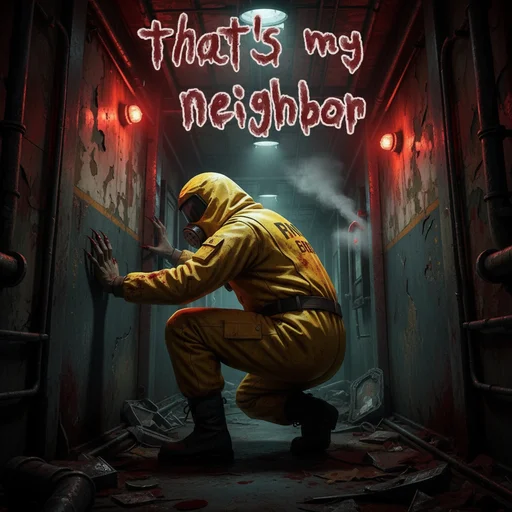
Play That's Not My Neighbor and experience the ultimate horror-simulation blend where you become a doorman tasked with identifying doppelgangers infiltrating your apartment building. Inspect identification documents, scrutinize physical features, and make life-or-death decisions about who gains entry in 1955. This free online That's Not My Neighbor game combines detective work with bureaucratic horror, creating an addictive experience that will test your observation skills and nerve.
That's Not My Neighbor is a horror job simulator where you're a doorman identifying doppelgangers trying to infiltrate your building. Check IDs, call apartments to verify identities, and detect anomalies through careful observation. Features multiple game modes, including Campaign, Arcade, and Nightmare Mode. Perfect for horror and detective game fans. Play free now with no downloads required!
That's Not My Neighbor is a groundbreaking horror job simulator created by Costa Rican indie developer Nacho Sama (Ignacio Alvarado). Released on February 15, 2024, the game combines the tension of document inspection with cosmic horror elements, placing you in the shoes of a doorman in 1955, facing an unprecedented crisis. The Department of Doppelganger Detection (D.D.D.) has tasked you with preventing shape-shifters from infiltrating your apartment building through meticulous identity verification and careful observation.
Since its initial launch, That's Not My Neighbor has exploded into a cultural phenomenon, captivating millions of players across Itch.io, Steam, and browser platforms. The game's unique blend of horror atmosphere, puzzle-solving mechanics, and darkly comedic bureaucracy has earned widespread acclaim and spawned a thriving community dedicated to sharing detection strategies and gameplay discoveries. With multiple game modes—Campaign Mode with different endings, Arcade Mode for high-score chasing, Nightmare Mode for extreme difficulty, and Custom Mode for creative players—That's Not My Neighbor offers virtually unlimited replay value.
The foundation of That's Not My Neighbor gameplay revolves around meticulous document inspection. Each visitor presents an identification document containing crucial information: full name, ID number, birth date, and a photograph. Your first task involves comparing the presented ID against the daily entry request list—if someone claims to be on the list but appears nowhere in the records, immediate suspicion arises. However, experienced players understand that absence from the list doesn't automatically indicate doppelganger status; legitimate tenants sometimes arrive unexpectedly. Cross-referencing identity information with apartment phone calls provides confirmation, making document verification the cornerstone of successful That's Not My Neighbor gameplay.
Beyond documentation, That's Not My Neighbor requires visual scrutiny of physical characteristics that separate humans from doppelgangers. Pay meticulous attention to eye color—both eyes must match the ID photograph exactly, with no mismatches or unusual hues suggesting supernatural origin. Examine moles, birthmarks, and scars carefully; doppelgangers sometimes copy IDs imperfectly, resulting in feature discrepancies. Watch for unnatural movement patterns or unsettling facial expressions suggesting non-human intelligence behind the mask. Strange third eyes, additional facial features, or anatomical impossibilities immediately signal doppelganger presence. The game's visual style deliberately highlights these anomalies, rewarding players who maintain constant vigilance.
That's Not My Neighbor introduces the phone system as a crucial verification tool. Upon suspicion, you can contact the apartment to confirm tenant information directly. Speaking with family members, roommates, or the tenant themselves provides invaluable confirmation of identity. However, doppelgangers sometimes manipulate phone responses, requiring careful listening to detect inconsistencies in stories or suspicious evasiveness. Some tenants may be unavailable, complicating verification. Experienced players develop telephone conversation strategies, asking specific questions that reveal truthful versus fabricated responses. The phone system transforms That's Not My Neighbor from pure visual identification into a sophisticated social engineering challenge.
Every decision in That's Not My Neighbor carries weight. Allowing a doppelganger entry into the building results in consequences that unfold across subsequent shifts, with the creature's influence spreading through the apartment complex. Falsely accusing legitimate residents of doppelganger status triggers Department of Doppelganger Detection responses that remove innocent tenants. Your accuracy rating directly influences campaign endings—allowing too many doppelgangers results in catastrophic outcomes, while excessive false accusations creates different narrative consequences. This branching consequence system ensures that no two playthroughs of That's Not My Neighbor follow identical progressions.
As you advance through That's Not My Neighbor campaigns, doppelgangers become increasingly sophisticated at mimicry. Early encounters feature obvious anomalies—three eyes, entirely wrong facial structures, or completely mismatched documentation. Mid-game doppelgangers copy human appearance almost perfectly, requiring examination of minute details like mole positions or eye color gradations. Late-game adversaries display near-flawless human mimicry, with only subtle inconsistencies revealing their true nature. This escalation transforms That's Not My Neighbor from straightforward identification into a game demanding intense concentration and psychological warfare.
That's Not My Neighbor features a Campaign Mode spanning multiple in-game days where your decisions accumulate into one of several endings. Your performance—measured by correct identifications and decision-making consistency—determines which finale you achieve. Successfully identifying all doppelgangers unlocks the "perfect" ending, while allowing infiltrators or falsely accusing residents triggers alternate conclusions. Each ending provides closure to the 1955 apartment building crisis with different narrative implications. Campaign Mode transforms That's Not My Neighbor from episodic gameplay into a continuous narrative experience where your choices genuinely matter.
Arcade Mode strips away narrative elements, focusing purely on identification accuracy and speed. You face an endless stream of visitors within a single continuous shift, with score accumulation based on correct identifications and points deducted for errors. Doppelgangers begin with obvious tells but progressively become more subtle as your score increases. Arcade Mode encourages optimization—learning doppelganger patterns, developing rapid verification routines, and sacrificing safety margins for speed. This competitive mode appeals to players seeking high-score chasing and leaderboard competition, transforming That's Not My Neighbor into an arcade-style reflex challenge.
Nightmare Mode introduces brutal difficulty modifiers that transform That's Not My Neighbor into a grueling challenge. Visitors arrive faster, documents become deliberately unclear or ambiguous, and doppelgangers employ increasingly sophisticated deception tactics. Phone verification becomes unreliable as creatures manipulate conversations, and visual anomalies become subtler. Even veteran players find Nightmare Mode punishing—a single mistake cascades into catastrophic consequences. Only the most skilled players survive Nightmare Mode extended playthroughs, making mastery of this difficulty tier a badge of honor within the That's Not My Neighbor community.
Custom Mode allows players to design their own apartment building residents and doppelgangers, then challenge themselves to identify infiltrators within custom scenarios. This creative mode transforms That's Not My Neighbor from consumer-level gameplay into an empowering creative tool. Players design realistic tenants with detailed backstories, then craft doppelganger imposters featuring specific anomalies. Custom scenarios shared within the community create infinite replayability, with player-designed challenges often exceeding official content's difficulty and creativity.
That's Not My Neighbor runs seamlessly across multiple platforms and devices. While the official Steam version represents the primary release, browser-based versions enable instant access without installation. The game performs consistently whether accessed via desktop computer, laptop, or tablet, with responsive design adapting to various screen sizes. Mobile ports on iOS and Android extend accessibility, though the detailed visual inspection mechanics work most intuitively on larger screens.
| Platform | Availability | Performance | Status |
|---|---|---|---|
| Steam (Official) | Windows/Mac | Excellent | Current Version |
| Itch.io | Web Browser / Download | Very Good | Legacy Versions |
| Browser (Online) | All Modern Browsers | Good | Free Play |
| Google Play (Android) | Mobile Devices | Very Good | Current Version |
| iOS App Store | iPhone/iPad | Very Good | Available |
| PC via Google Play | Windows/Mac | Good | Cloud Play |
Getting started with That's Not My Neighbor is straightforward. Follow these steps to begin your doppelganger-hunting career:
| Action | Control Method | Description |
|---|---|---|
| Select Document | Click on ID or Papers | Examines identity documents and entry requests |
| Review Checklist | Click Checklist Button | Displays daily entry request list for verification |
| Call Apartment | Click Phone Button | Contacts apartment to verify resident information |
| Approve Entry | Click Approve Button | Allows visitor to pass through building entrance |
| Call D.D.D. | Click Emergency/Alert Button | Reports suspected doppelganger for extraction |
| Examine Appearance | Click on Visitor | Focuses on physical features for anomaly detection |
| Move Between Items | Tab Key or Arrow Keys | Navigates between documents and interface elements |
| Zoom Documents | Mouse Scroll / Pinch (Mobile) | Magnifies documents for detail examination |
| Access Menu | Click Menu Icon | Pauses game and accesses settings |
| Restart Level | Menu Button Selection | Restarts current day/shift |
| Action | Touch Control | Description |
|---|---|---|
| Select Document | Tap on ID or Papers | Opens and examines identity documentation |
| Review Checklist | Tap Checklist Button | Enlarges visitor's appearance for inspection |
| Call Apartment | Tap Phone Icon | Initiates phone verification conversations |
| Approve Entry | Tap Approve/Pass Button | Permits a visitor to enter the building |
| Report Doppelganger | Tap Alert/D.D.D. Button | Calls emergency extraction for suspects |
| Examine Person | Tap Visitor Portrait | Moves documents around the desk for better viewing |
| Drag Documents | Swipe to Reposition | Enlarges the visitor's appearance for inspection |
| Zoom In/Out | Pinch Gesture | Magnifies or reduces document visibility |
| Open Menu | Tap Menu Icon | Accesses pause menu and settings |
| Back Navigation | Swipe Back Gesture | Returns to previous screen or menu |
Beginning That's Not My Neighbor players should prioritize establishing systematic verification routines. Always start by comparing ID photographs against the visitor's current appearance—look for obvious discrepancies in eye color, facial structure, or distinctive marks. Next, cross-reference names and ID numbers against the daily entry list, noting any absences as immediate red flags. Early doppelgangers feature obvious tells like multiple eyes, distorted facial proportions, or completely wrong IDs. Don't rush decisions—carefully examine all visible details before making approval or alert decisions. Use the phone system liberally during early shifts to verify resident information, building confidence in identification accuracy before facing advanced doppelgangers.
Mid-game That's Not My Neighbor strategy emphasizes identifying subtle anomalies while managing time constraints. As doppelgangers become more sophisticated, focus on minute details: eye color gradations, mole placement precision, and slight expression irregularities. Develop phone conversation strategies—ask specific questions about personal information that only legitimate residents would know. Time your phone calls strategically; if apartments don't answer, that's a potential warning sign for absent residents or compromised lines. Pay attention to narrative inconsistencies—visitors claiming different stories on different days warrant immediate scrutiny. Balance caution with speed; overthinking every decision costs time that compounds across multiple visitor encounters.
Elite That's Not My Neighbor players optimize every aspect of their verification process. Memorize common doppelganger tactics—they often claim to be on the list when absent, present slightly altered IDs, or exhibit unnatural behavior patterns. Develop pattern recognition for subtle physical anomalies; experienced players spot cosmetic copies missing tiny details others overlook. Master phone verification through rapid information gathering—efficient conversations yield verification without wasting precious seconds. In Arcade Mode, prioritize speed over perfection once you've memorized doppelganger patterns. Learn the specific tells of each apartment's residents, enabling instant verification without phone calls. Practice repeatedly on Nightmare Mode to condition reflexive decision-making under extreme time pressure.
Successful That's Not My Neighbor players employ a systematic verification framework applied consistently across all encounters. Step 1: Check ID photograph against current appearance (5 seconds maximum). Step 2: Cross-reference entry list status (5 seconds). Step 3: Examine physical anomalies (10-15 seconds). Step 4: If uncertain, call apartment for verification (30-60 seconds). Step 5: Make final decision based on accumulated evidence. This framework prevents overlooking details while maintaining efficiency. Adapt the framework based on confidence levels—confident identifications require fewer verification steps, while suspicious cases warrant full investigation.
Success in That's Not My Neighbor requires psychological confidence in difficult decisions. Accept that some choices feel ambiguous—the game deliberately creates scenarios with inconclusive evidence. Train yourself to make decisive calls based on available information rather than endlessly second-guessing. Record your decisions and outcomes to identify patterns in your error rates, then adjust verification strategies accordingly. Remember that even expert players make mistakes; what matters is learning from errors and adapting future decisions. Nightmare Mode especially demands accepting that some visitors present genuine ambiguity, requiring you to make judgment calls that balance risk and consequence.
If you love That's Not My Neighbor, explore these other horror and puzzle games combining suspense with strategic decision-making. Each delivers unique mechanics while maintaining the tension and consequence-driven gameplay that defines great horror experiences. From supernatural survival to time-management terror, these titles provide diverse entertainment options for players seeking psychological scares and challenging gameplay.
| Game Title | Game Type | Key Features | Play Time | Link |
|---|---|---|---|---|
| FNAF 2 Unblocked | Survival Horror | Night security job, animatronic threats, camera monitoring, time management | 3-5 hours | Play FNAF 2 Unblocked |
| Granny 2 Unblocked | Survival Horror | Escape gameplay, stealth mechanics, puzzle solving, resource management | 4-6 hours | Play Granny 2 Unblocked |
| Lethal Company Unblocked | Co-op Horror | Cooperative survival, monster threats, puzzle progression, team strategy | 5-8 hours | Play Lethal Company Unblocked |
| Poppy Playtime Unblocked | Puzzle Horror | Environmental puzzles, toy horror theme, atmospheric exploration, survival | 3-4 hours | Play Poppy Playtime Unblocked |
| Backrooms Unblocked | Exploration Horror | Liminal space exploration, creature threats, atmospheric dread, psychological horror | 2-3 hours | Play Backrooms Unblocked |
That's Not My Neighbor offers both free and paid versions. Browser-based versions are completely free to play, while the official Steam and mobile versions are premium purchases. All game content remains identical across platforms; paid versions simply support the developer directly.
Yes, That's Not My Neighbor is available on iOS and Android devices via official app stores. The mobile version includes all game modes and features, though document inspection mechanics work most intuitively on larger screens due to detail examination requirements.
Campaign Mode completion typically takes 2-3 hours for first-time players, though completion times vary based on decision speed and verification strategy. Arcade Mode and Nightmare Mode offer unlimited replayability with no defined ending points.
Campaign Mode features multiple endings determined by your identification accuracy and decision-making throughout the story. Perfect identification earns the optimal ending, while excessive false alarms or doppelganger infiltrations trigger different narrative conclusions, each with distinct implications for the apartment building's fate.
That's Not My Neighbor carries horror themes and psychological tension making it better suited for teenagers and adults. The game features no graphic violence, but the cosmic horror premise and unsettling atmosphere may disturb younger players. Parental discretion is recommended.
Doppelgangers are identified through document inconsistencies (mismatched IDs, altered information), physical anomalies (wrong eye colors, extra features, unnatural appearance), suspicious behavior, and verified phone information contradicting their claims. No single factor definitively proves impostor status; careful observation of multiple details determines accuracy.
Browser-based versions require internet connections, though some downloaded versions may support offline play. Steam and mobile versions offer full offline functionality once purchased and installed.
Nightmare Mode represents extreme difficulty, featuring faster-arriving visitors, deliberately ambiguous documents, and increasingly subtle doppelganger tell-tale signs. Even experienced players find Nightmare Mode punishing; completion requires mastery of advanced identification techniques.
That's Not My Neighbor is single-player only. However, Arcade Mode leaderboards enable competitive score-chasing against other players globally, fostering community competition within a single-player format.
Yes, Custom Mode allows designing custom apartment building residents and doppelganger impostors, then challenging yourself to identify infiltrators. Created scenarios can be shared within the community for others to attempt.
While both feature document inspection mechanics, That's Not My Neighbor emphasizes visual anomaly detection and horror atmosphere rather than purely documentation-based decisions. That's Not My Neighbor features branching narratives, phone verification, and multiple game modes, offering broader gameplay variety.
Developer Nacho Sama regularly releases updates adding new features, game modes, balance adjustments, and content expansions. As of March 2025, major updates have added Campaign Mode, Nightmare Mode, and Custom Mode to the original Arcade Mode.
Yes, That's Not My Neighbor features rich worldbuilding around the 1955 doppelganger crisis and the Department of Doppelganger Detection. Campaign Mode gradually reveals story elements explaining the phenomenon, affecting different endings based on your performance.
Yes, speedrunning communities actively compete for Arcade Mode high scores and campaign completion times. Optimized verification routines, pattern memorization, and refined decision-making enable significantly faster playthroughs than casual attempts.
Primary indicators include: mismatched eye colors (most reliable), mole position differences, wrong ID numbers or birth dates, suspicious behavior patterns, unnatural facial expressions, visitors claiming list membership when absent, and family members contradicting claims during phone verification. Combine multiple observations for accurate identification.